A Plea at the Café de Flore
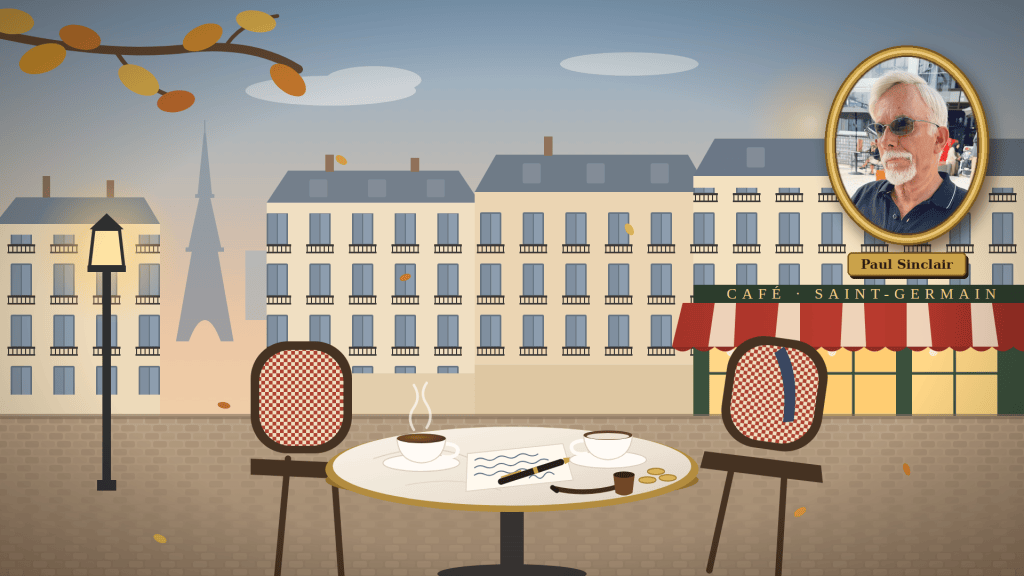
An imaginary dialogue. Paris, a November morning. Jean-Paul Sartre (1905–1980) sits at his usual table. Paul Sinclair, a retired mathematics teacher, takes the seat across from him.
PAUL — Monsieur Sartre, your Lizzie keeps me up at night.
SARTRE — Good. I didn’t write her to lull anyone to sleep.
PAUL — What troubles me is that she doesn’t lie out of malice. She signs out of respect.
SARTRE — Respect is exactly what interested me. Hatred can be seen from a distance; respect disguises itself as virtue. In Scottsboro, in 1931, nine Black teenagers were accused of a crime they hadn’t committed. It took little hatred to convict them, but a great many well-mannered people to stay silent.
PAUL — Today, no senator hands us a pen. And yet we sign.
SARTRE — Because the senator has dissolved into the crowd. In No Exit, I wrote that the gaze of others could become hell. Your century has multiplied that gaze by millions of screens. No one needs to force you anymore: you sign in advance.
PAUL — I taught mathematics for twenty-three years. A proof is either true or false; you don’t round it off to please the examiners. But outside the classroom, I’ve watched adults round off the truth the way you round off a decimal: just a little, politely… and the error accumulates.
SARTRE — A fine image. A rounding error repeated a thousand times ends up as the official truth.
PAUL — Allow me, though, to plead for Lizzie. She was alone, poor and unprotected, facing a senator. Which of us would have done better?
SARTRE — No one, perhaps. That is why I don’t condemn her: I show her. The theatre is not a courtroom; it is a mirror. If the audience recognizes their own hand holding the pen, the play has succeeded.
PAUL — So, are we truly free to say what we think?
SARTRE — Always. What you lack is not freedom, it’s a free ride. Telling the truth has a price. Lizzie was free not to sign; she simply didn’t want to pay.
PAUL — But not everyone has your courage. You could turn down the Nobel Prize. An employee can’t always stand up to the boss, or cross them.
SARTRE — You’re right, and I’m not asking for heroism. I’m asking for clear-sightedness. Don’t say “I’m not allowed” when you mean “it would cost me.” The first is a lie; the second is a choice. Own it.
PAUL — And the innocent man in all this?
SARTRE — He’s the one I wrote for. He is never in the room when his fate is decided. While polite people avoid making waves, he is always the one who pays.
PAUL — What would you say to my readers?
SARTRE — That each of them, one day, holds Lizzie’s pen. Never sign without reading.
He stands, leaves a few coins on the table, and walks out into the cold of Saint-Germain. I remain alone with my cup. And I wonder how many times in my life I have signed without reading.
This dialogue is imaginary: Sartre’s lines are my own invention, not quotations. It is inspired by his play La Putain respectueuse (1946), known in English as The Respectful Prostitute, and by the Scottsboro case (Alabama, 1931), whose last defendants received posthumous pardons in 2013. Originally published in French in my LinkedIn newsletter Les chroniques de Paul on November 1, 2026.


Leave a Reply